

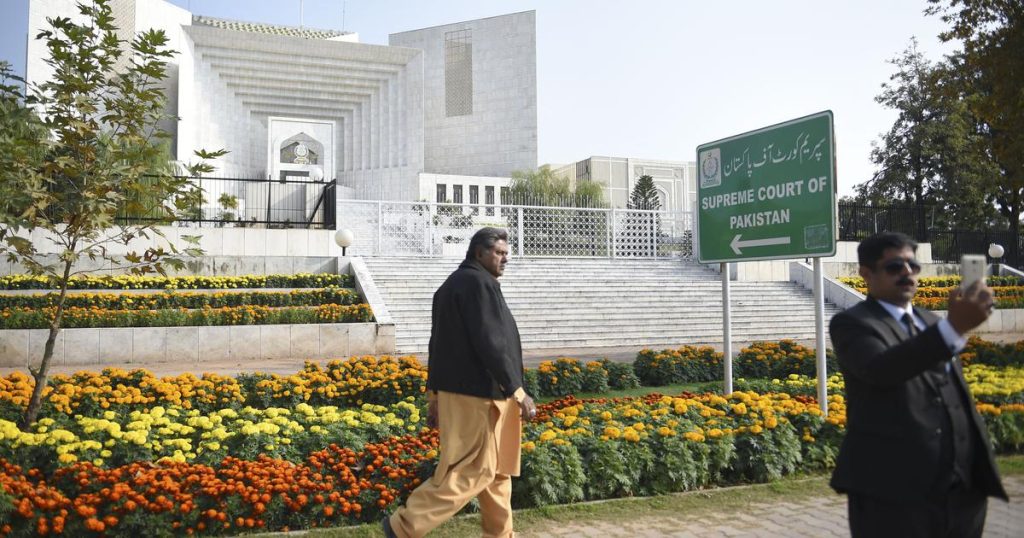
ISLAMABAD: The Supreme Court on Friday reiterated that an amendment to the Elections Act cannot undo its judgment in the case of the reserved seats.
The top court issued a second clarification today after the Election Commission of Pakistan (ECP) approached the court seeking a clarification on its order to grant reserved seats to the Pakistan Tehreek-e-Insaf (PTI).
On July 12, a 13-judge full bench of the apex court had declared that the Imran Khan-founder party was eligible to receive reserved seats for women and non-Muslims in the national and provincial assemblies, potentially making the PTI the single largest party in both houses of Parliament.
The electoral watchdog argued that it could not implement the orders due to the amendments to the Election Act, 2017.
Last month, the National Assembly Speaker Ayaz Sadiq wrote a letter to the chief election commissioner noting that the judgment of the reserved seats cannot be implemented as the Election (Second Amendment) Bill 2024 barred the PTI-backed ‘independent’ legislators from joining the party.
The apex court’s clarification, a copy of which is available with Daily Ausaf, stated: “Since the commission and PTI both have asked for a second clarification, we want to simply clarify and reiterate the well-settled exposition of law that the effect of the amendment made in the Elections Act cannot undo our judgment with retrospective effect.”
“The amendments made in the Elections Act after the release of our short order will have no bearing and the Commission is bound to implement the judgment passed by the Supreme Court of Pakistan, in its letter and spirit, without seeking any further clarification,” the clarification order added.
“The detailed reasons have already been released and all legal and constitutional issues raised and argued by the parties have been dealt with eloquently and answered, therefore, no further clarification is required to be issued. The judgment of this court has binding effect in terms of Article 189 of the Constitution of the Islamic Republic of Pakistan, 1973, and should have been implemented,” the court said.


