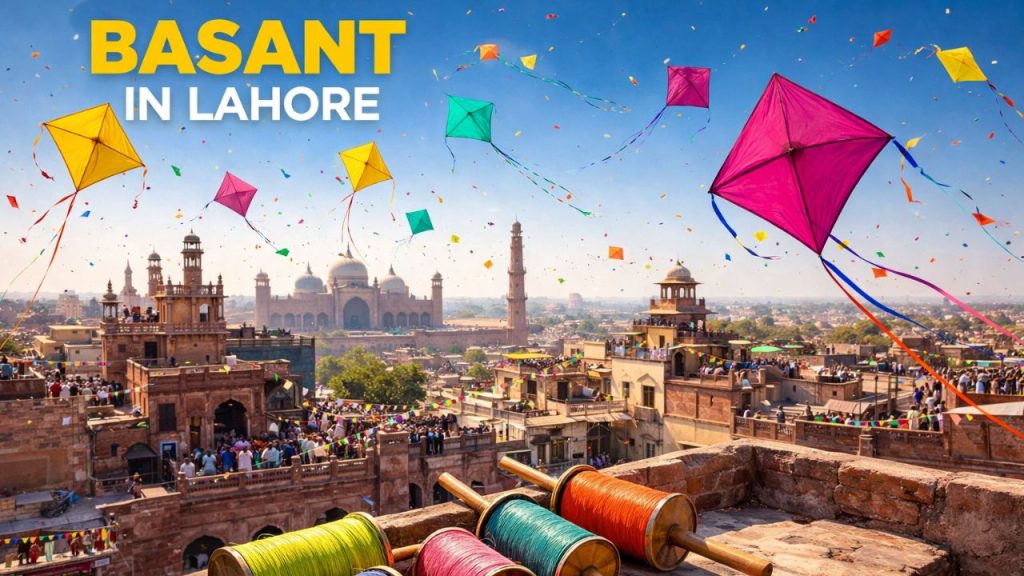
Basant is more than a festival in Pakistan it is a powerful cultural memory, especially for the people of Lahore. For decades, Basant in Lahore represented color, celebration, music, and the arrival of spring. The skies once turned golden with thousands of kites, rooftops echoed with laughter, and the city stayed awake through the night.
Although the festival has faced restrictions in recent years, its cultural importance remains strong. This article explores Basant history, traditions, regulations, safety concerns, and the realities of celebrating Basant in modern Lahore in a way that is informative, easy to understand, and relevant for today’s readers.
What Is Basant?
Basant, sometimes mistakenly written as Basnat in Lahore, is a traditional spring festival that marks the end of winter and the beginning of warmer days. The word “Basant” comes from ancient languages and means spring season.
Historically, Basant was celebrated across Punjab, but Lahore became its cultural heart. Over time, Basant festival in Lahore gained national and international attention due to its scale, energy, and unique rooftop kite-flying culture.
Basant History: From Ancient Roots to Modern Lahore
The basant history goes back hundreds of years. Early agricultural communities celebrated spring because it meant fertile land, new crops, and prosperity.
Basant During the Mughal Era
Historical records suggest that Mughal rulers encouraged spring celebrations. Poets, musicians, and artists were invited to court gatherings, and kite flying became a popular royal pastime.
Rise of Basant in Modern Lahore
In the late 20th century, Basant in Lahore transformed into a massive urban festival. The city became famous for:
-
Competitive kite flying
-
All-night rooftop parties
-
Yellow clothing and decorations
-
Traditional Punjabi food
-
Folk and modern music
By the 1990s and early 2000s, Lahore was globally known for Basant.
Basant in Lahore Dates (2026)
Basant in Lahore is set to take place from February 6 to February 8, 2026, signaling the return of the beloved spring festival after nearly 18 years of restrictions. This three-day celebration is expected to bring back the festive spirit of the city with organized kite flying, live music performances, and a variety of food stalls. Most of the activities will be held in carefully selected locations, particularly DHA Phase 9 Prism, where a large “Mega Mela” is planned, along with events at DHA Raya.
Authorities have introduced strict safety rules to ensure the festival is celebrated responsibly. The use of sharp or hazardous strings including metallic, plastic, and nylon varieties is strictly prohibited, and only registered vendors will be allowed to sell kites and related materials. Violations may lead to heavy penalties.
To further enhance safety, traffic officials are expected to support motorcyclists with protective measures, helping reduce risks during the festivities. Often described as a celebration of color and renewal, Basant 2026 represents a carefully managed revival of a tradition that holds deep cultural meaning for Lahore.
Basant Holidays
Basant Holidays in Lahore
At its peak, basant holidays in Lahore were common. Schools, offices, and businesses often closed informally because the entire city participated in celebrations.
Basant Holidays in Punjab
In several cities, people observed unofficial basant holidays in Punjab, especially where kite flying was popular.
Today, Basant is not an official holiday, but its memory remains deeply rooted.
Facilities on Basant Days in Lahore
During large-scale celebrations, authorities and private organizations arranged special Facilities on basant days in lahore, including:
-
Emergency medical camps
-
Rescue teams on standby
-
Traffic control systems
-
Rooftop safety inspections
-
Hotel and tourism services
These facilities were designed to manage massive crowds and ensure public safety.
Bus Servise on Basant Days
The bus servise on basant days was often extended to handle increased movement across the city. Special routes and late-night operations helped people travel safely between neighborhoods, hotels, and celebration zones.
Public transport played a key role in managing traffic congestion during Basant.
Kites and Strings Rates in Lahore
The cost of kites and string in Lahore has risen sharply, making Basant an increasingly expensive celebration for many families. Even small-sized kites are now selling for Rs200 to Rs300, a price that many citizens consider unusually high. The situation is even more challenging when it comes to kite string.
A two-piece string spool (pinna) is currently being sold for Rs10,000 to Rs12,000, while a one-piece string spool costs around Rs4,500 to Rs5,000. These rising prices have caused concern among the public, with many residents urging the government to set official price limits for kites and strings to prevent overcharging and ensure the festival remains accessible to everyone.
Where to Get Basant Kites and Strings
Traditionally, old Lahore was famous for kite production.
Popular areas where to get basant kites and strings included:
-
Mochi Gate
-
Shah Alam Market
-
Lohari Gate
-
Akbari Mandi surroundings
These areas supported generations of skilled craftsmen.
Basant String Legal Use and Regulations
Basant string legal use became a major issue due to accidents caused by harmful strings.
Authorities introduced laws banning:
-
Metal wire
-
Glass-coated string
-
Chemical and nylon strings
Only approved, safe materials were allowed under regulated conditions.
Songs Allowed on Basant
Music has always been central to Basant.
Traditional and modern songs allowed on basant included:
-
Punjabi folk songs
-
Spring-themed music
-
Cultural performances
However, noise regulations applied, especially during late hours.
Basant Terms and Conditions for Celebration
Any controlled celebration involves basant terms and conditions, such as:
-
Restricted flying times
-
Approved kite materials
-
Rooftop safety barriers
-
Vendor licensing
-
Emergency readiness
These rules aim to protect lives while preserving cultural heritage.
Basant Precutions Everyone Should Follow
Basic basant precutions include:
-
Avoid flying kites near roads or power lines
-
Keep sharp tools secured
-
Supervise children closely
-
Stay aware of surroundings
Responsible behavior makes celebrations safer for everyone.
Safety on Basant Days: A Serious Priority
Safety on basant days became the most critical concern as the festival grew larger.
Authorities focused on:
-
Preventing string-related injuries
-
Protecting motorcyclists
-
Managing rooftop overcrowding
-
Ensuring emergency access
Public safety remains the main challenge in reviving Basant.
Safety Precautions on Basant Days
Important safety precautions on basant days include:
Rooftop Safety
-
Install railings
-
Avoid overcrowding
-
Keep children away from edges
Kite Handling
-
Use protective gloves
-
Avoid sharp or banned strings
Roof Rates on Basant in Lahore
One unique feature was rooftop rentals.
Roof rates on basant in lahore depended on:
-
Location
-
Height
-
View of open skies
-
Safety arrangements
Prime rooftops in central Lahore demanded very high prices during the festival.
Basant Main Areas in Lahore
Historically, the most active basant main areas included:
-
Old City (Androon Lahore)
-
Gulberg
-
Model Town
-
Ichhra
-
Samanabad
These neighborhoods were known for intense kite competitions.
Ban Areas for Basant in Lahore
For safety reasons, authorities designated ban areas for basant in lahore, including:
-
Airport zones
-
Military and sensitive areas
-
High-voltage transmission zones
-
Major highways
These restrictions aimed to prevent accidents and infrastructure damage.
Safety Precaution on Basant in Lahore for Motorcycles
Motorcyclists faced serious risks during Basant.
Key safety precaution on basant in lahore for motorsycles include:
-
Wearing full-face helmets
-
Using neck guards
-
Riding at low speed
-
Avoiding kite-flying zones
Awareness campaigns strongly emphasize these measures.
Economic and Social Impact of Basant
At its height, Basant supported thousands of livelihoods:
-
Kite makers
-
String manufacturers
-
Street vendors
-
Musicians and performers
-
Food businesses
-
Hotels and tourism
The festival significantly boosted Lahore’s seasonal economy.
Cultural Importance of Basant in Lahore
Basant symbolizes:
-
Hope and renewal
-
Community bonding
-
Artistic expression
-
Punjab’s cultural identity
Even today, many Lahoris consider Basant a defining part of their heritage.
The Future of Basant in Lahore
Many believe Basant can return in a safer, controlled form through:
-
Designated kite-flying zones
-
Strict enforcement of safety laws
-
Public education campaigns
-
Use of safe materials
Balancing tradition with safety is key to the festival’s future.
Conclusion
Basant in Lahore remains one of Pakistan’s most cherished cultural traditions. From its rich basant history to the excitement of kite flying, music, and rooftop gatherings, the Basant festival represents joy, unity, and the spirit of spring.
While safety concerns have reshaped how the festival is viewed, responsible planning, awareness, and adherence to basant terms and conditions, basant precutions, and safety precautions on basant days could allow this iconic celebration to survive in a modern, safer form.
Basant is not just about kites it is about identity, memory, and the enduring cultural soul of Lahore.