GAWADAR: A new slaughterhouse in Gwadar has started operating to meet the growing demand for donkey meat, bones, and hides from China, which is used to produce e-jiao, a traditional Chinese remedy.
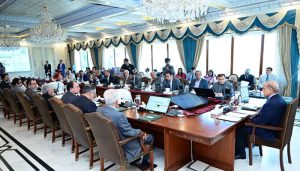
In Pakistan’s export sector, this is a big breakthrough, mostly for donkey-derived products. By the agreement concluded between Pakistan and China for the export of donkey products Chinese companies have already begun operating in Gwadar-the National Assembly Standing Committee on Food Security, which was chaired by Rana Muhammad Hayat, discussed the agreement and felt the increasing interest of Chinese companies to open up additional donkey slaughterhouses in Pakistan.
The export of by-products instead of that of live donkeys has been indicated to be feasible due to the difficulties in logistics. Because of the woke revolution, should development plans be reoriented toward improving selective breeding programs at a pace that would ensure a healthy donkey population for economic use? Pakistan has around an estimated donkey population of 5.9 million, out of which the major market for donkey products including e-jiao is China itself.
The export stood delayed due to protocol resulting in other hindrances in smooth trade.
Dramatic globalization of the donkey industry in adaption to provide e-jiao to China has led to a large-scale slaughtering of donkeys, which creates a shortage of donkeys worldwide.
Since 1992, the population of donkeys in China has decreased by more than 80 percent, making that country search for donkey skins from some other countries, Pakistan included.
However, it is contentious and comes with some complications, and most of the donkey skins exported from Pakistan to China are part of an undercover trading network.
Donkeys reproduce slowly, making it hard to develop a farm-to-consumer system flexible enough to meet the annual demand for donkey skins for e-jiao.